“Grain to glass” is one of the most-used phrases in craft spirits, and one of the least-examined. A lot of brands say it. Far fewer can actually walk you from the field to the bottle without a gap they’d rather you didn’t notice. As an ecologist, I think about that whole journey the way I once thought about a watershed — every stage connected, nothing wasted, the end shaped entirely by the beginning.
So let me actually walk you through it.
It starts in a field
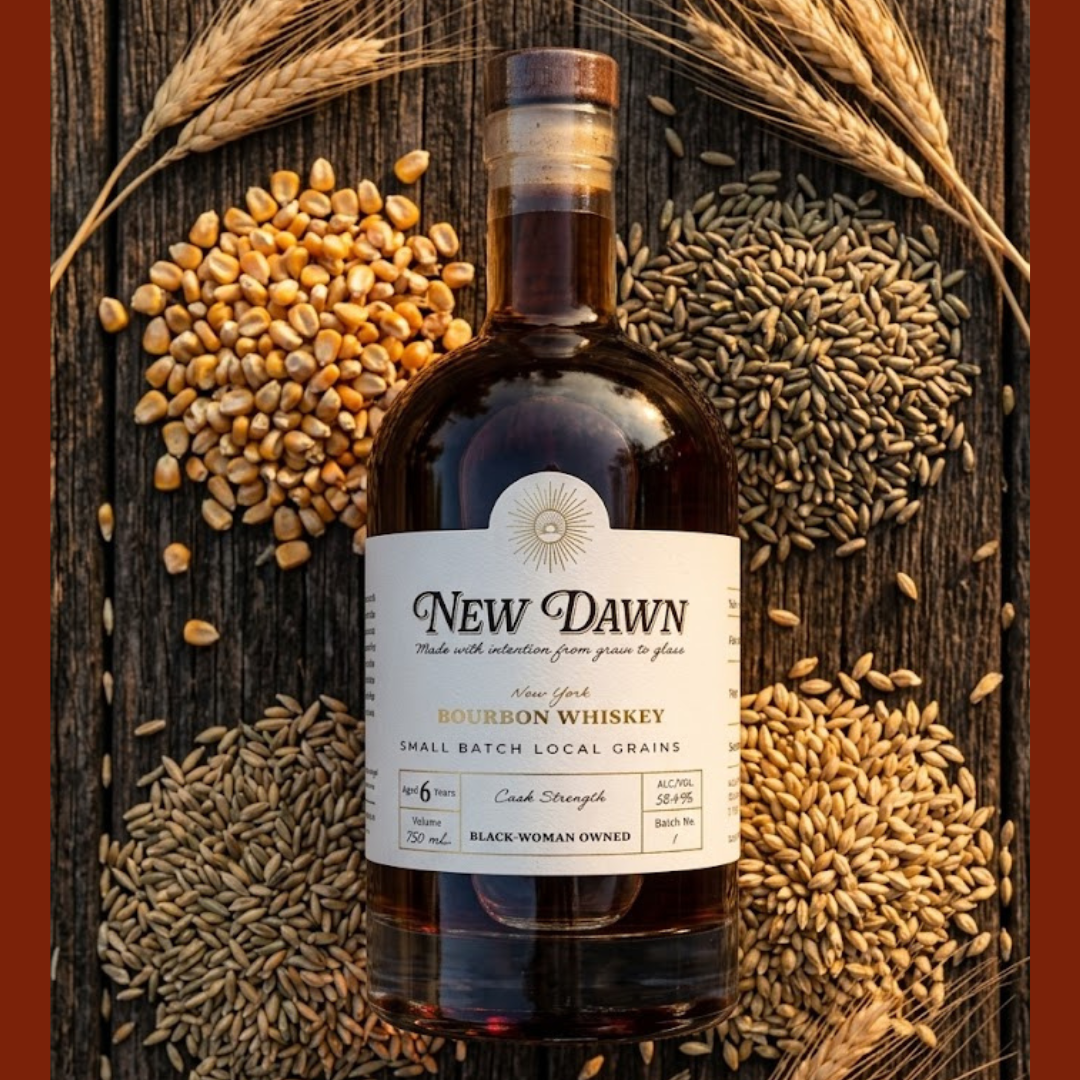
Our 6-Year Cask Strength Bourbon begins as organic grain grown in New York: 70% New York corn, 15% New York winter rye, 15% New York barley. That mash bill isn’t arbitrary. Corn brings the sweetness and body that make bourbon bourbon. Rye adds spice and structure. Barley carries the enzymes that help convert starch to sugar, and adds depth and a little earthiness of its own. Choosing organic and local isn’t a marketing badge for me — it’s ecological consistency. If I’m going to talk about sustainability and terroir, the grain has to earn the words.
Mashing and fermentation
The grains are milled and cooked with water to release their sugars — this is the mash. Our water comes from the Catskills where our grain is grown and bourbon distilled. Then yeast goes to work, converting those sugars into alcohol over several days of fermentation. Fermentation is where a surprising amount of flavor is born: fruit notes, spice, the aromatic compounds that will echo all the way through to your glass. Rush it, and you flatten the whiskey’s character. Respect it, and you build a foundation worth aging.
Distillation
Distillation concentrates the spirit and shapes its final profile — the distiller’s cuts decide what stays and what’s left behind. Done with care and by taste, not fancy equipment, you keep the rich, complex heart of the run and discard the harsh edges.
The barrel and time
Then comes patience, starting with aging in 52 gallon Kelvin Cooperage oak barrels. Two years in a temperature controlled warehouse at high temperatures mimicking the Caribbean. Four years in a non-temperature controlled rickhouse in the Catskill Mountains, where the climate does slow, essential work — but that’s a story big enough for its own post. What matters here is what we don’t do: we don’t add coloring, and we don’t add flavoring. We don’t even add water beyond that used in the initial distillation. What you taste — cherry, almonds, apricots, croissants, and vanilla — comes from grain, oak, climate, and time. Nothing else.
Why additive-free is the whole point
Plenty of whiskeys, including some very popular ones, use additives to soften or sweeten the spirit. That’s a choice, and it makes for an approachable product. But it’s a different product than the one I want to make. New Dawn is built for the person who wants to taste what mother nature actually did — the honest version. Additive-free, cask strength, no shortcuts. That’s grain to glass, meant literally.
Taste the result. Pick up a bottle of the 6-Year today, and join my email newsletter — that's where the exclusive content lives. [Join here.]