Terroir Isn’t Just for Wine: How the Catskills Live in Your Whiskey
Say the word “terroir” at a wine table and everyone nods. Say it at a whiskey bar and you’ll get a few raised eyebrows. I’d like to change that — because the idea that place shapes flavor isn’t a wine concept. It’s an ecological one, and it applies to whiskey with just as much force.
What terroir actually means
Terroir is the sum of the environmental conditions — soil, climate, geography — that shape an agricultural product. Grapes carry it obviously. But whiskey is agricultural too: it starts as grain grown in a specific place and matures in a barrel that breathes with the weather around it. Ignore terroir in whiskey and you’re leaving flavor — and truth — on the table.
People will often tell you in whiskey terroir doesn’t matter because distilling strips out those environmental aspects. It simply isn’t true. Environment conditions directly influence the sugar and flavor compounds that make up your grains which influences the mash and ultimately the final distilled product. Telling people otherwise is simply a way for larger brands to get away with subpar grains in your whiskey and open the door for additives, including water in the final proofing, to hide unwanted flavors.
What the Catskills do
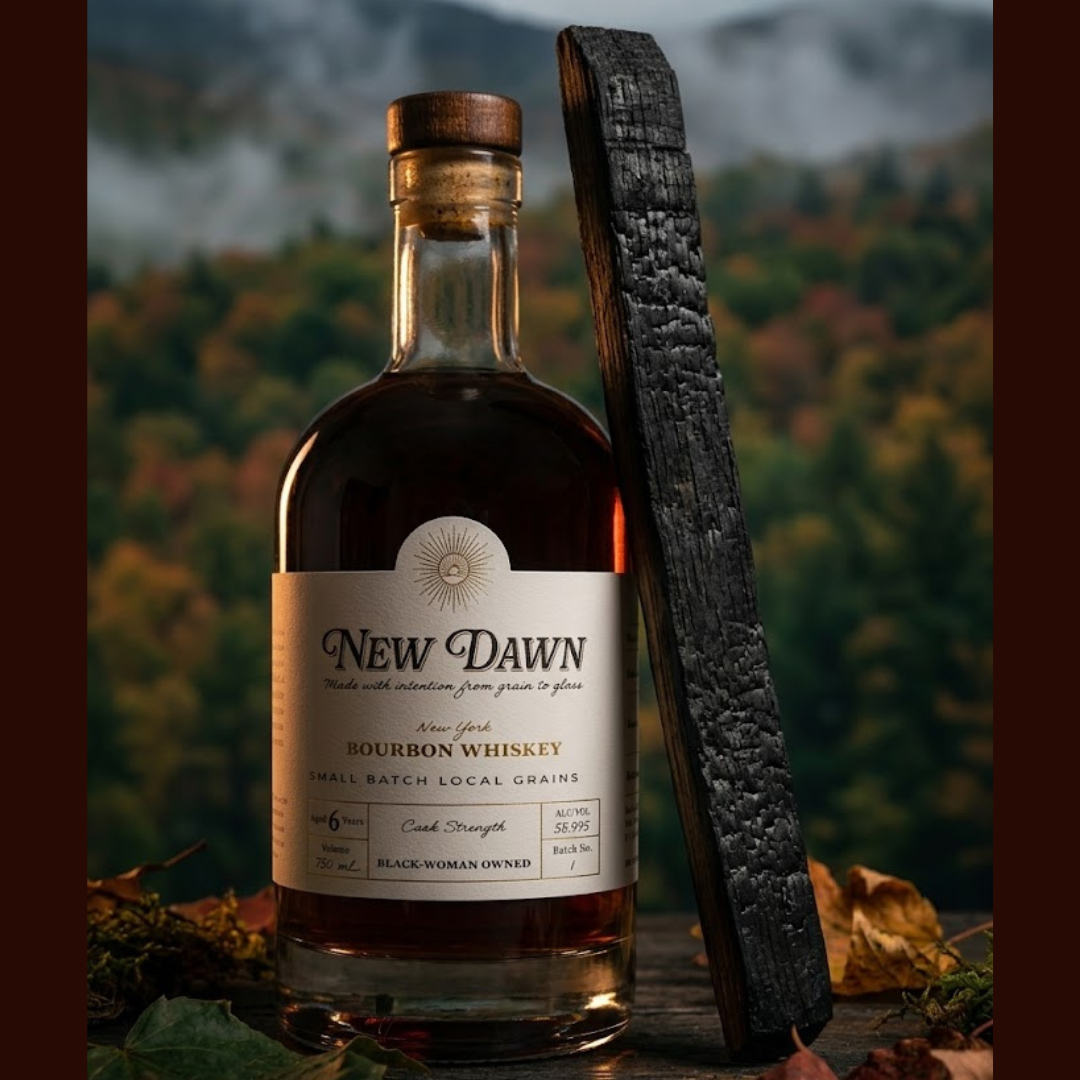
Our 6-Year Cask Strength Bourbon ages in the Catskill Mountains, and the climate there is doing constant, invisible work. In cold winters, the wood contracts and the spirit settles back out of the barrel. In warm summers, the wood expands and the spirit pushes deep into the charred oak, pulling out color, sweetness, and spice. Season after season, that expansion and contraction is what drives extraction — it’s the engine of maturation. Coupled with the first two years aging in a temperature-controlled warehouse held at high Caribbean style temps — pushing the liquid into the barrel and holding it there — gives our bourbon its deep rich color. A whiskey aged in a mild, stable climate ages differently than one that endures real Catskill winters and humid summers. Neither is wrong. But they are not the same, and the difference is place you can taste.
This is where my background comes in. I spent a decade in conservation thinking about how climate acts on living systems. A barrel is, in its own way, a small ecosystem — and reading it is the same kind of attention.
Why cask strength protects terroir
Here’s the part that ties it together: cask strength. When a whiskey is bottled at full barrel proof, without dilution, everything the grain and the climate built stays intact and concentrated. Dilute it heavily and you soften those signals; add flavoring or coloring and you bury them entirely. We bottle at cask strength and additive-free precisely because we want you to taste the terroir undiluted. If the mountain did the work, you should get all of it.
Two expressions, two senses of place
You can taste this idea across our range. The 6-Year Bourbon is bold and rich, the Catskills speaking loudly. The 10-Year Wheated Whiskey (70% wheat) is more sophisticated and restrained, the same place expressed with a softer voice and more time. And there’s a third chapter coming: our California 5-Year Rye, aged at Sonoma Distilling Co., where a completely different climate will make a completely different whiskey from the same philosophy. Same belief in terroir; a new landscape to prove it.
Taste the difference place makes. Compare the expressions yourself and don’t forget to join the email list for first access to new releases and exclusive content. [Join here.]