From Speakeasy to Social Club: The Rhythm & Soul of Sophistication
The Elegance of the Northern Rhythm
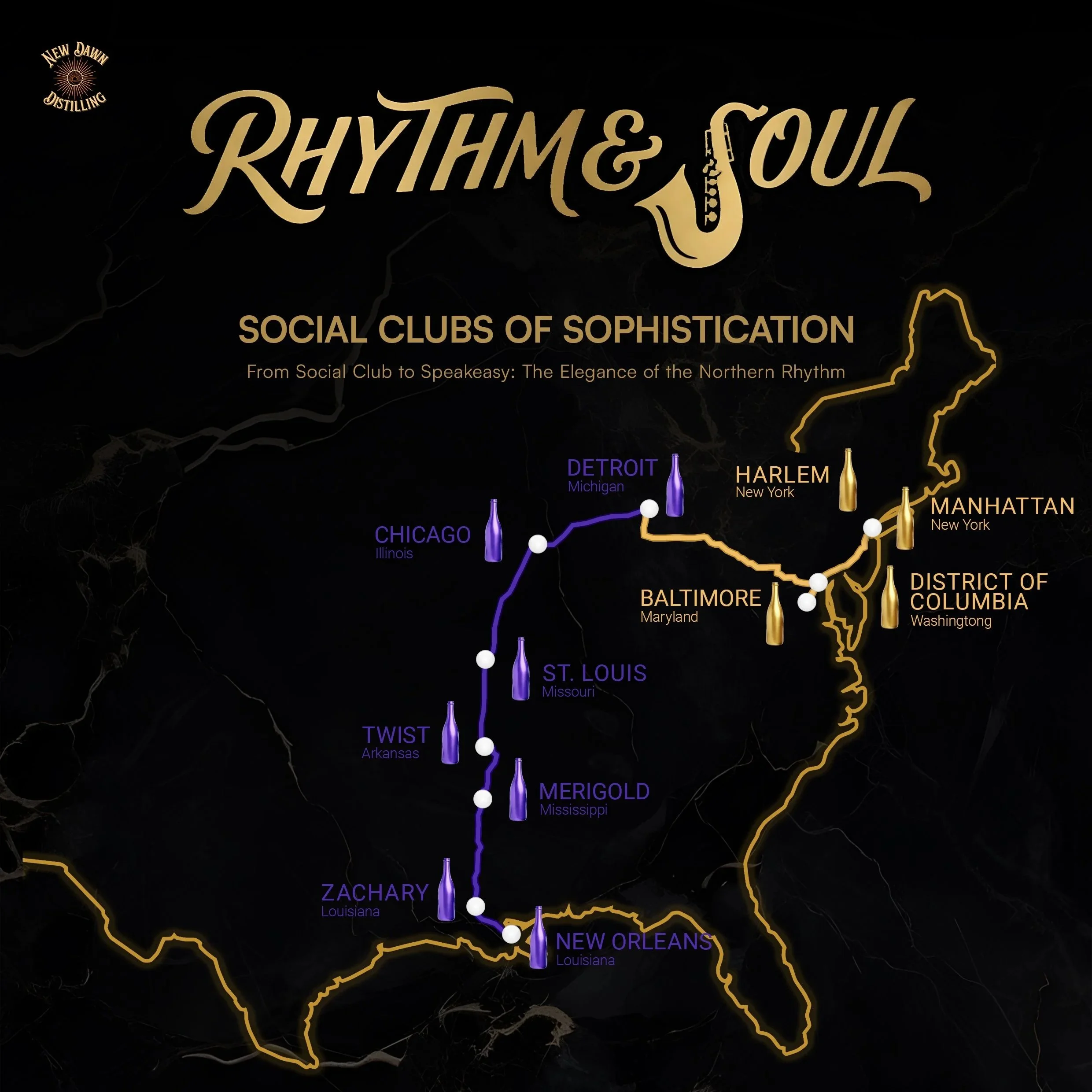
The Great Migration—a sweeping movement of Black Americans from the rural South to the urban North—was not just a demographic shift; it was a cultural transformation. As Southern rhythm met the bustling streets of cities like New York and Chicago, the informal "juke joints" and house parties of the South evolved. These venues became the vibrant heart of the Harlem Renaissance and the cultural flourishing that defined the era.
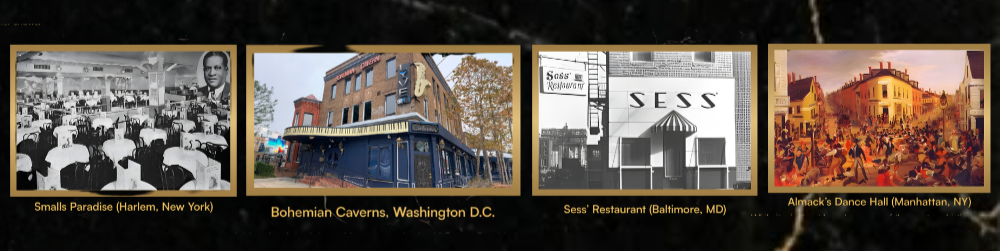
Moving North, that authenticity was at times polished and elevated and sometimes raw and passionate. Cities became epicenters of Black artistry, intellectual exchange, and high fashion. Smalls Paradise in Harlmen serves as an iconic example. One of the only well-known Harlem night clubs to be owned by a Black man and integrated, it was famed for its hospitality, food, waiters who danced the Charleston or rollerskated, and was open all night, unlike other clubs, with a 6am breakfast dance with a full floor show. Places like Smalls Paradise epitomized the fusion of top-tier entertainment and southern soul, launching the careers of countless Black artists and drawing diverse crowds.
Elsewhere, the cultural scene deepened. Washington, D.C.'s U Street corridor, known as "Black Broadway," offered its own sophisticated blend. Bohemian Caverns, replete with plaster stalactites to give that “real cavern feel,” was the place for late night jam sessions and hidden stashes of liquor discretely served in tea cups besides a menu of chicken and pork chops. Later in the 60s it became the premier spot to hear the development of contemporary jazz hosting legends like Miles Davis, John Coltrane, and Nina Simone. In 1968, it was one of many U-street establishments to close following the riots that swept the U-street District following Martin Luther King’s assassination, but was revived several times until its final closing in 2016.
Meanwhile, places like Sess’s Restaurant in Baltimore, served as crucial networking and intellectual centers for the Black elite. While not a speakeasy, its close proximity to West Baltimore's Pennsylvania Avenue, home to several theaters including the Royal Theater known for hosting artists of the Chittlin Circuit, made it a natural stopping place for entertainers such as Cab Calloway, Ethel Waters, and Dinah Washington to grab a bite after shows. It was also the unofficial meeting spot for Black politicians of Baltimore and served as an essential space for thought leadership, community building, and the shaping of national cultural trends during the Prohibition era and beyond.
The last stop on our historic tour brings us to Almack’s Dance Hall in Manhattan, NY. While not the most sophisticated establishments as it was located in the basement of a carpenter’s show in Five Points Manhattan, it was one of New York’s first Black-owned and operated bars in the 1800s and is considered the birthplace of tap dancing. Owner Pete Williams provided space for a mixed race clientele to drink and dance. William Henry Lane, or “Master Juba,” was also the primary draw, even catching the attention of Charles Dickens, with his marrying of the rhythms of African gioube and the Irish jig to create a new blend of percussive dance.
These social clubs were crucibles for American music, fashion, and intellectual thought. They represent an elevation of taste—the Southern soul distilled and presented with Northern precision.
A Whiskey of Two Worlds
This history of sophisticated elevation mirrors the journey of New Dawn Whiskey. Our spirit is a premium, cask-strength whiskey, representing the uncompromising quality and rigorous standards of New York craft distillation. This Northern precision delivers a rich, robust profile, influenced by the distinct climate of its aging process.
Yet, the essential, soulful balance and deep character are authenticated by the rich lineage of discerning palates and Southern intuition passed down through the generations to me, and now shared with you through New Dawn’s whiskeys.
New Dawn is a whiskey of two worlds—combining the foundational intuition of the South with the elevated precision of the North.
Behind the Barrel: Did you know New Dawn's New York whiskeys draw unexpected influence from the Caribbean. Unlike many whiskeys that might be finished in specific temperature conditions, our 6-year-old bourbon and 10-year-old wheated whiskey utilize a technique inspired by Caribbean rum distillers. For the first two years of aging, the whiskeys are kept at high temperatures, mimicking tropical climates. This intense heat jumpstarts the extraction of rich flavors from the oak barrels. After this period, the "liquid gold" is moved to non-climate-controlled warehouses, allowing ample time for the flavors to fully develop. This unique process results in the deep, rich color and bold, smooth character that defines New Dawn's whiskeys.
Frequently Asked Questions (FAQ)
Q: What is the significance of speakeasies and social clubs in the Black community?
A: Speakeasies and social clubs were pivotal cultural crucibles. They were essential spaces for Black artistry, intellectual exchange, and community building during an era of segregation and Prohibition, directly fueling cultural movements like the Harlem Renaissance. They represent the elevation of Black American taste and style.
Q: What is a "cask-strength whiskey"?
A: Cask-strength, or barrel-proof, whiskey is bottled directly from the aging barrel without being significantly diluted with water. This results in a higher proof and a more intense, robust flavor profile, reflecting the "uncompromising quality" mentioned in the article.
Q: How does New Dawn utilize the Caribbean rum distilling technique?
A: New Dawn's technique involves aging their 6-year-old bourbon and 10-year-old wheated whiskey at high temperatures for the first two years, mimicking the intense heat of tropical climates. This "jumpstarts" the extraction of rich flavors and deep color from the oak barrels before the whiskey is moved to non-climate-controlled warehouses for full development. This process ensures a bold, smooth character.
Q: Where was "Black Broadway" located?
A: The U Street corridor in Washington, D.C., was known as "Black Broadway," housing cultural landmarks like Bohemian Caverns.
Q: Which venue is considered the birthplace of tap dancing?
A: Almack’s Dance Hall in Five Points, Manhattan, NY, is considered the birthplace of tap dancing. It was one of New York’s first Black-owned and operated bars and featured William Henry Lane, or "Master Juba."