Uncut & Unapologetic: A Deep Dive into Barrel Proof Whiskey
Whiskey enthusiasts often chase the thrill of a barrel-proof pour, but what exactly does "barrel proof" mean, and why has it become such a coveted term in the spirits world? The Liquor Connoisseur and New Dawn teamed up to uncork the history and nuances of barrel proof whiskey and why you should consider a pour regardless of where you are on your whiskey journey. Check out the full episode below!
A Glimpse into History: The Roots of High Proof
The concept of high-proof spirits is as old as distillation itself. Before modern bottling and precise proofing techniques, spirits were often sold directly from the barrel, retaining the potency at which they emerged from the aging process. This wasn't a choice for connoisseurship; it was simply how things were done. Early distillers, particularly in the nascent American whiskey industry, didn't have the luxury of diluting their product consistently to a specific, lower proof. Therefore, consumers of the past were often enjoying what we would now consider barrel-proof whiskey, albeit in a less refined and standardized form.
Beyond the College Party: Barrel Proof vs. High-Proof Liqueurs
For many, their first introduction to high-proof alcohol might have been through spirits like Everclear or novelty liqueurs like 99 Bananas during their college years. These spirits, while undeniably high in alcohol content, are fundamentally different from barrel-proof whiskey. These are often neutral grain spirits, sometimes flavored, designed to deliver a potent alcoholic kick. Their primary appeal is their high alcohol content, often used as a base for mixed drinks where the flavor of the spirit itself is not the star. They lack the complexity, depth, and character that comes from aging in charred oak barrels.
Barrel Proof Whiskey on the other hand has been aged in barrels and bottled at the proof it held when it was removed from those barrels. When you sip New Dawn’s whiskeys you're getting the opportunity to taste what the angels taste when they take their share as the whiskey matures. The high proof in barrel-proof whiskey isn't just about getting drunk; it's about preserving the full, undiluted flavor profile developed during years of maturation. The wood, char, and environmental factors all contribute to a rich tapestry of flavors that are more concentrated and intense in a barrel-proof offering.
The Undiluted Truth: Why Barrel Proof is Better
While the initial kick of a barrel-proof whiskey might seem intimidating, there are compelling reasons why it's often considered a superior drinking experience for the discerning palate:
Flexibility and Customization
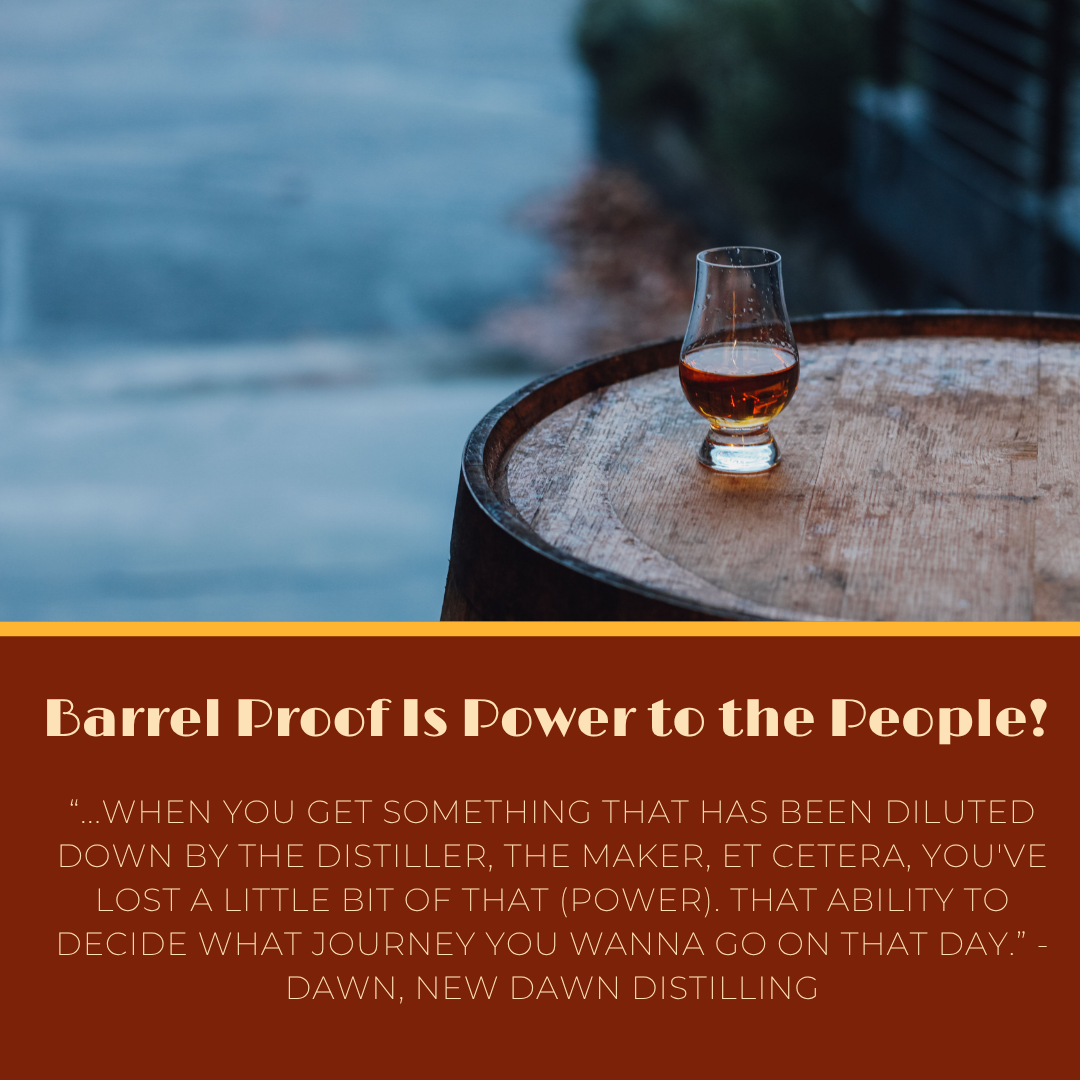
One of the greatest advantages of barrel-proof whiskey is the control it gives the consumer. You can add water to your desired proof, one drop at a time, to unlock different flavor nuances. A few drops can "open up" the whiskey, revealing new aromas and tastes that might be hidden at full strength. This personal customization allows you to tailor each sip to your exact preference, something you can't do with pre-diluted spirits.

A Journey of Discovery: Growing with Your Palate
Barrel-proof whiskeys can evolve with your drinking journey. As your palate becomes more refined and accustomed to stronger flavors, you can gradually reduce the amount of water you add, experiencing the whiskey in increasingly undiluted forms. It's a spirit that encourages exploration and rewards a developing appreciation for its intricate character.
Elevating the Cocktail Experience
Many mixologists and home enthusiasts argue that barrel-proof whiskey makes for superior cocktails. The higher proof means the whiskey's robust flavors won't be easily lost or diluted by other ingredients. It stands up to mixers, adding depth and complexity that lower-proof whiskeys might struggle to achieve. A barrel-proof old fashioned, for example, will have a more pronounced whiskey character, allowing the spirit to truly shine.
Refining Your Baking
When it comes to culinary applications, barrel-proof whiskey can elevate baked goods in a way that lower-proof spirits cannot. Its concentrated flavors and higher alcohol content ensure that the distinct notes of oak, caramel, vanilla, or spice aren't lost during the baking process. Instead, these robust characteristics become an intentional flavor rather than a subtle background whisper. From rich chocolate cakes to boozy fruit tarts and sweet potato pies, barrel-proof whiskey contributes a depth and complexity that enriches the overall profile, allowing the spirit to truly shine as a key ingredient.
The Maker's Dilemma: Why Not Always Barrel Proof?
Given its advantages, why don't more distillers release all their whiskey at barrel proof? The answer lies in a combination of economics and perceived consumer preferences.
Cost
Diluting whiskey with water before bottling significantly increases the volume of product a distiller can sell from a single barrel. More bottles mean more revenue. Selling at barrel proof, while offering a premium product, inherently yields fewer bottles per barrel, thus impacting profit margins.
Misconceptions about Consumer Tastes
For a long time, and to some extent still today, there's a prevailing idea that lower-proof spirits are more palatable and accessible to a broader audience. Many consumers, especially those new to whiskey, might find the intensity of barrel-proof overwhelming. Distillers often aim for a proof point that offers a balance of flavor and approachability, ensuring their product appeals to the widest possible market. While this perception is slowly changing as whiskey enthusiasts become more educated, it remains a factor in production decisions.
Barrel-proof whiskey is far more than just a high-alcohol drink. It's a testament to the distiller's craft, a canvas for personal exploration, and a potent tool for creating exceptional cocktails. It represents the whiskey in its purest, most unadulterated form, offering an experience that's both challenging and incredibly rewarding.
Frequently Asked Questions about Barrel Proof Whiskey
Q: Is there a difference between barrel proof and cask strength?
A: No, they essentially mean the same thing - alcohol that hasn’t been diluted or anything added after coming out of barrel storage.
Q: What does "barrel proof" mean?
A: "Barrel proof" refers to whiskey that has been bottled at the same alcohol content (proof) it had when it was removed from the aging barrel, without any added water to dilute it.
Q:How is barrel proof whiskey different from other high-proof spirits like Everclear?
A:Barrel proof whiskey is aged in charred oak barrels, developing complex flavors and character. Spirits like Everclear are often neutral grain spirits, sometimes flavored, primarily designed for their high alcohol content rather than a nuanced flavor profile.
Q:Why is barrel proof whiskey considered "better" by some enthusiasts?
A:Barrel proof whiskey offers greater flavor intensity and allows for customization. You can add water to your desired proof to unlock different flavors, and its robust character stands up well in cocktails.
Q: Can I drink barrel proof whiskey neat (undiluted)?
A: Yes, of course! It’s the way New Dawn’s founder Dr. Dawn O’Neal prefers her whiskey! But the best part of barrel proof is you can customize it to your tastes, adding a few drops of water to open up its flavors, especially if you are new to barrel proof whiskey. The high proof can be intense, and water can reveal hidden aromas and tastes.
Q: Why don't all distillers release their whiskey at barrel proof?
A: There are two main reasons: cost and consumer preferences. Diluting whiskey increases the volume sold per barrel, leading to more revenue. Additionally, many distillers believe lower-proof spirits are more palatable and accessible to a broader audience.
Q:Does barrel proof whiskey get you drunk faster?
A: Due to its higher alcohol content, barrel proof whiskey can lead to intoxication more quickly if consumed at the same volume as lower-proof spirits. It's important to drink responsibly and be mindful of the higher proof. As the Liquor Connoisseur reminds us, “Drink to remember, not to forget.”
Q: What are the benefits of adding water to barrel proof whiskey?
A: Adding a few drops of water can "open up" the whiskey, revealing new and subtle aromas and flavors that might be masked at full strength. It allows for a personalized drinking experience, tailoring the whiskey to your exact preference.
Q: Is barrel proof whiskey suitable for cocktails?
A: Absolutely! Many mixologists prefer barrel proof whiskey for cocktails because its robust flavors are less likely to be diluted by other ingredients, ensuring the whiskey's character shines through.
Q: Should you bake with barrel poof whiskey?
A: Yes! If you’re going to add whiskey to your baked goods it should be intentional because you want to add those flavors not just make it boozy. Barrel proof spirits ensure the flavors you’re adding are prominent and not lost and help elevate your baking.