The Unseen Ingredient: Why Clean Water is Critical to Whiskey
When you sip a perfectly aged whiskey, your senses are filled with the rich notes of grain, oak, and time. But there's a vital, often-unseen ingredient that shapes every drop: water. For New Dawn Distilling, clean, sustainable water is not just a necessity for production—it's a core expression of our commitment to environmental and social justice.
Water: The Foundation of Flavor
Whiskey is essentially a blend of three things: grain, yeast, and water. Water is used at every stage of the distilling process, from mashing the grain to controlling fermentation temperature, and finally, proofing the spirit before bottling.
It should come as no surprise that pure water, free of pollutants and unwanted chemicals, is essential to prevent off-flavors and maintain a clean flavor in your whiskey. During mashing, water combines with grains to break down starches into sugars. The mineral content of the water can affect enzyme activity, flavor extraction, and consistency of the mash. During distillation, water is used again to control temperature and alcohol concentration. High-quality water ensures a smoother transition through these stages, capturing the intricate flavors unique to each small-batch distillery.
Before we get into why clean water is a must for good whiskey, let’s talk about water’s role in the distillation process.
Fermentation: Water as the Sculptor of Flavor and Texture
The Role of Minerals
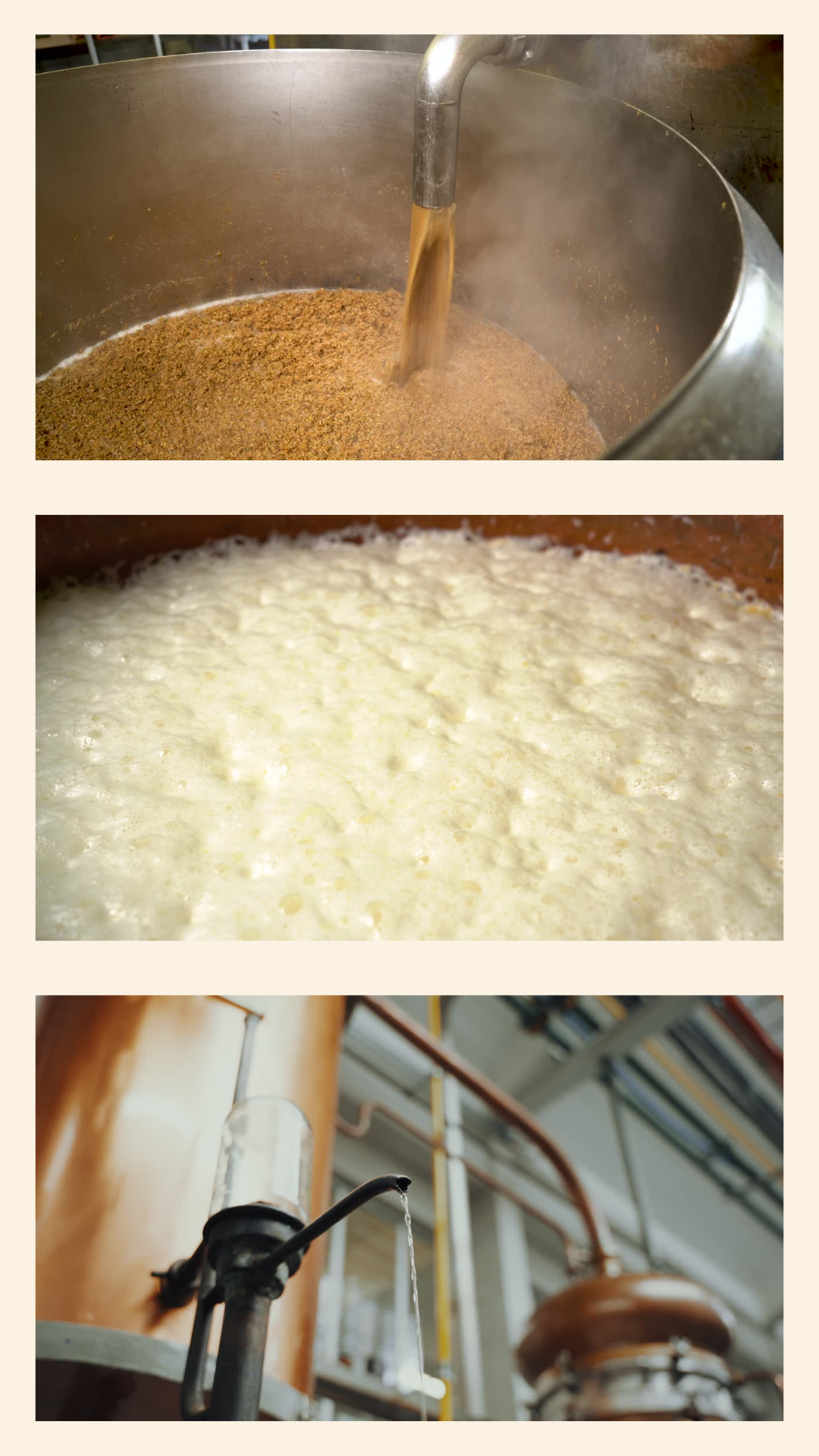
The mashing process, a foundational step in spirit production, is profoundly influenced by the water's mineral composition. The water's mineral content, specifically the presence of ions such as calcium, magnesium, and bicarbonates, acts as a critical cofactor for the amylase enzymes. These enzymes are responsible for hydrolyzing the starches present in the grains (e.g., malted barley, corn, rye) into fermentable sugars.
Water can contain varying levels of minerals such as calcium, magnesium, iron, and sodium. Minerals like calcium and magnesium in water can enhance the activity of yeast during fermentation, leading to more efficient conversion of sugars into alcohol and creating more complex flavor compounds. Calcium is crucial for enzyme stability and activity. Adequate calcium levels help to optimize the mash pH, often targeted in the range of 5.2 to 5.6, which is ideal for amylase function. They also aid in flocculation, promoting a clearer wort. Magnesium also contributes to enzymatic activity and can buffer the mash, though its effect is less pronounced than calcium. But not all minerals are good, bicarbonates Act as a buffering agent, resisting changes in pH. High levels of bicarbonate in hard water can raise the mash pH, potentially hindering enzyme efficiency and leading to a less complete starch conversion, which ultimately impacts the yield and can introduce undesirable flavors.
The precise balance of these minerals dictates the efficiency of starch-to-sugar conversion, the final sugar profile of the wash (or wort), and consequently, the complex flavor precursors that will be carried through distillation and define the final flavor profile of the spirit. Distillers often treat their water or select source water with great care to achieve the ideal mineral balance for their specific grain bill and desired spirit character.
The Role of pH
The water’s pH level and mineral content can impact yeast health and the resulting flavors. pH, the measure of how acidic or alkaline a substance is, also has a part to play in whisky production. Water with a specific pH level can aid in the extraction of desirable compounds from the malted barley, affecting the overall flavor and character of the whisky. The pH of water affects the enzymes during the mashing process. Water that is too acidic or too alkaline can inhibit enzyme activity, affecting the conversion of starches to sugars and, consequently, the flavor profile of the whisky.
Proofing: Water as the Corrector
Proofing, or the precise dilution of the high-proof distillate to its final bottling strength (proof), is the final step where water interacts intimately with the spirit. This is not a passive mixing; the quality, purity, and composition of the water used at this stage have a direct and discernible impact on the spirit's taste and mouthfeel. Proofing is arguably the second-most important ingredient after the distillate itself, profoundly shaping the final perceived taste and the pleasantness of the spirit's texture upon the palate.
Remember proofing really says a lot about a distiller’s palate - water is often added to make an aged distillate taste “better.” But it can also be used to correct unwanted flavors and aromas. At New Dawn our whiskeys are cask-strength, no water added after aging, because we cherish our partnership with mother nature and think she got it right the first time 😉
Things distillers must keep in mind when proofing:
Purity
The water must be exceptionally pure, often demineralized or reverse-osmosis filtered, to avoid introducing any off-flavors, trace minerals, or compounds that could react with the complex array of esters, aldehydes, and higher alcohols in the spirit. Any residual chlorine, for instance, can react with the spirit components to create harsh or medicinal notes.
Chemical Interaction and Louching
When high-proof spirit is diluted, the solubility of certain flavorful compounds, particularly higher-molecular-weight esters and fatty acids, changes. This can cause the spirit to become slightly hazy or opaque, a phenomenon known as 'louching' or 'the ouzo effect.' While sometimes desirable (as in absinthe or ouzo), careful, slow dilution with pure water helps control this interaction, ensuring the spirit remains bright and clear while allowing the flavor components to integrate smoothly.
Water’s Role in All the Things You Really Care About in Your Whiskey
Water’s Role in Mouthfeel and Texture
The choice of water influences the final texture. Highly purified water allows the inherent texture of the spirit, often described as oily, viscous, or smooth, to come to the fore. Soft water can create a smooth, creamy texture, while water with higher mineral content may result ileading to a harsher or 'drier' finish. Minerals like calcium, for example, can contribute to a fuller body, while magnesium might bring a touch of sweetness.
Water’s Role in Flavor and Aroma
Water that flows through different geological formations, like granite, peat, or limestone, picks up distinct characteristics that can influence the whisky’s flavor. For example, peat-heavy water adds smoky, earthy notes, while mineral-rich water can contribute a slight brininess or metallic edge.
Why Clean Water Is So Important
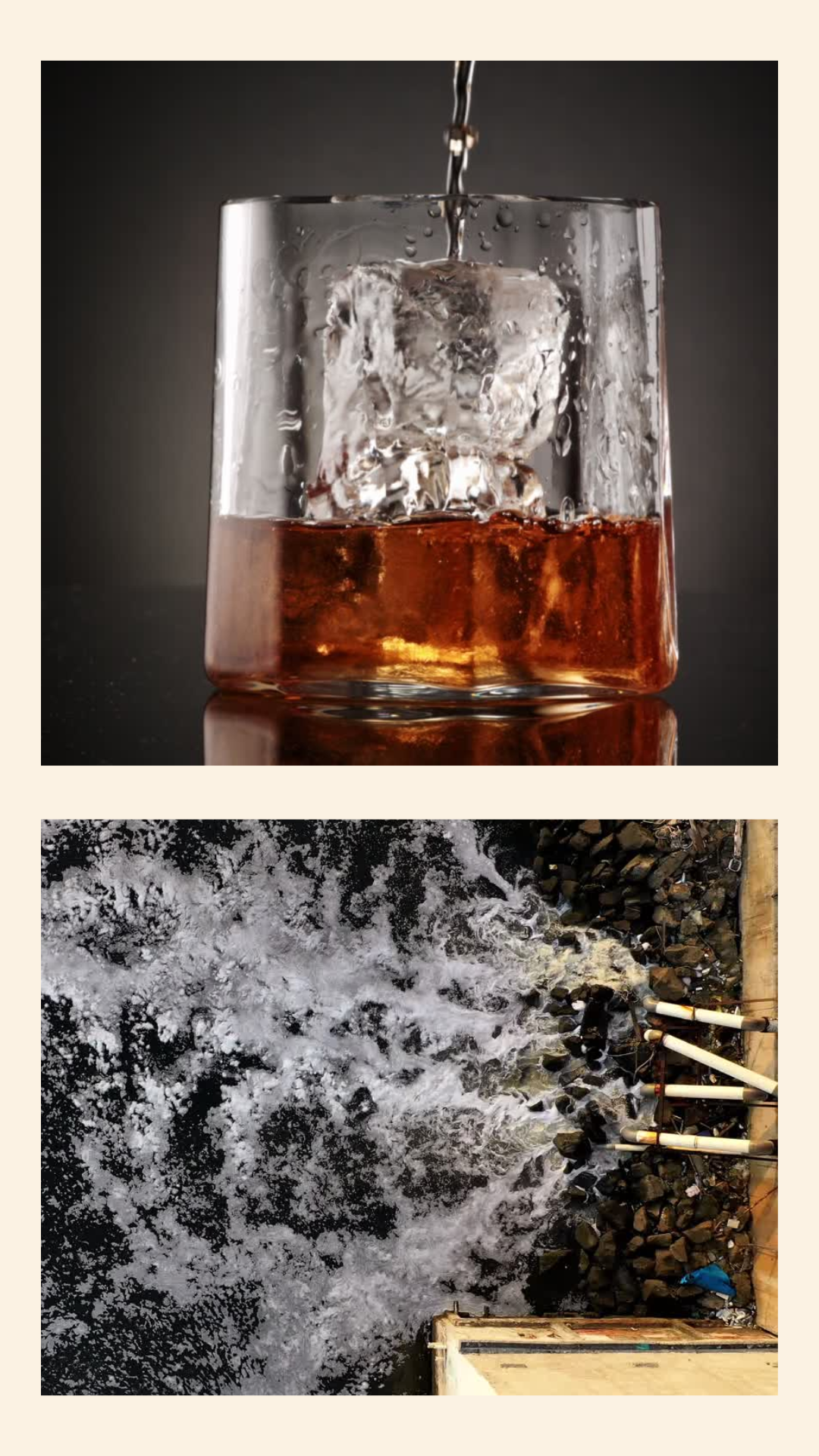
The quality of water is paramount in the distillation process, and the presence of pollutants can have disastrous consequences for the final product. Polluted water, often contaminated through agricultural runoff or industrial discharge, can introduce a range of undesirable elements, most notably excess minerals and pesticides, into the fermentation and distillation stages.
During fermentation, the yeast is highly sensitive to its environment. An overabundance of minerals, such as heavy metals or certain salts, can stress the yeast cells, inhibiting their metabolic function. This mineral load can slow down the fermentation process considerably, or in severe cases, cause it to stop entirely. When fermentation is compromised, the conversion of sugars into alcohol and crucial flavor compounds is incomplete.
Furthermore, the introduction of pesticides, herbicides, and other chemical residues, even in trace amounts, can directly interfere with the delicate chemical reactions occurring throughout the process. These contaminants are often not eliminated during distillation and can carry through, leading to an imbalance in the resulting flavors and aromas. Instead of the clean, desired profile, the spirit can exhibit off-notes, including metallic, bitter, or soapy undertones.
Finally, the impact extends to the spirit's physical characteristics, particularly during the proofing stage where water is added to bring the spirit down to bottling strength. Water containing unwanted dissolved solids can lead to cloudiness or precipitation (sometimes called 'flocculation') in the final product. More critically, the chemical composition of the water can affect the spirit's texture, resulting in an unwanted, rough, or 'thin' mouthfeel, undermining the smoothness and complexity that a distiller strives to achieve. Therefore, pristine water quality is a non-negotiable requirement for crafting a high-quality, balanced spirit.
For a whiskey to achieve clarity, consistency, and exceptional taste, the water must be pristine. But our commitment goes deeper than flavor; it's about ecological responsibility.
New Dawn's Practices: Stewards of a Precious Resource
I bring a background in Ecology to every business decision, recognizing that water sustainability is inseparable from community well-being. Pollution, climate change, and excessive draw on natural sources disproportionately affect marginalized communities, making responsible water usage a matter of environmental justice.
Here is how New Dawn Distilling turns strategy into sustained change, ensuring clean water is protected for the whiskey we make and the communities we serve:
1. Water Conservation and Efficiency
We partner with distilleries whose operations are designed to minimize water waste and pressure on local infrastructure. By using local well water reduce strain on municipal water systems which means we aren’t taking from the community around the distillery to make whiskey. We also use a closed-loop distillation process which recycles cooling water, drastically cutting total water usage per batch.
2. Protecting Water Quality at the Source
The quality of our water starts with the health of the land. We support organic and regenerative agricultural practices that act as natural filters, keeping the water cycle clean. These farming methods minimize the use of chemical fertilizers and pesticides, preventing runoff that pollutes local rivers and groundwater. Regenerative agriculture, in particular, improves soil health, which enhances water retention and filtration.
3. Waste Reduction and Recycling
We treat byproducts not as waste, but as resources, preventing contaminants from entering the waste stream. Spent mashbill is donated to local farms for livestock feed, ensuring this substantial byproduct is kept out of landfills where it could potentially contaminate local waterways.
Distilling Change, Drop by Drop
For New Dawn Distilling, the pursuit of a smooth, complex whiskey runs parallel to the pursuit of a sustainable future. By committing to innovative water conservation, supporting land-based practices that filter and protect water sources, and integrating environmental stewardship into every aspect of our supply chain, we are ensuring that the most vital ingredient in our whiskey—clean water—remains available for both our product and for all. This is how we distill change.
Frequently Asked Questions (FAQ)
Q: Why is water so important to whiskey?
A: Water is the unseen, vital ingredient used at every stage of the distilling process—mashing, fermentation, distillation temperature control, and proofing. Its purity and mineral content directly shape the flavor, texture, and overall quality of the final whiskey.
Q: How does the mineral content of water affect the whiskey's flavor?
A: Minerals like calcium and magnesium are essential for the activity of amylase enzymes during mashing, which convert starches to sugars. They also enhance yeast activity during fermentation, leading to more complex flavor compounds. Conversely, high levels of bicarbonates can raise the mash pH, hindering enzyme efficiency and potentially introducing undesirable flavors.
Q: What is "proofing" and why is the water quality important during this stage?
A: Proofing is the final step where the high-proof distillate is diluted to its final bottling strength. The water used must be exceptionally pure (often filtered) to prevent introducing off-flavors, trace minerals, or compounds that could react with the spirit. The quality of proofing water profoundly impacts the whiskey's final taste and mouthfeel.
Q: What happens if polluted water is used to make whiskey?
A: Polluted water can introduce excess minerals, pesticides, or chemical residues. These contaminants can stress the yeast, slowing or stopping fermentation and leading to incomplete flavor development. Contaminants that carry through distillation can result in off-notes (metallic, bitter, soapy), and unwanted dissolved solids in the proofing water can cause cloudiness or a rough, 'thin' mouthfeel.
Q: How does New Dawn Distilling ensure water sustainability and protect water quality?
A: New Dawn employs several practices:
Water Conservation: Partnering with distilleries that use closed-loop systems to recycle cooling water and using local well water to reduce strain on municipal systems.
Protecting Sources: Supporting organic and regenerative agriculture, which naturally filters water and prevents polluted runoff from pesticides and chemical fertilizers.
Waste Reduction: Donating spent mashbill (a substantial byproduct) to local farms for livestock feed, preventing potential contamination of local waterways from landfills.
Q: Does New Dawn Distilling add water to its aged whiskeys?
A: No. New Dawn's whiskeys are cask-strength, meaning no water is added after aging. The company believes in the natural product resulting from their process and partnership with nature.
Q: Why does New Dawn view water usage as an environmental justice issue?
A: The company recognizes that water pollution, climate change, and excessive draw on natural sources disproportionately affect marginalized communities. Therefore, responsible water stewardship is seen as inseparable from community well-being and social justice.