Bourbon and Books: The Killing Spell
Finding the magic in language
Shay Kauwe's debut, “The Killing Spell”, is an fantasy-murder-mystery with a linguist's heart. It's set roughly two hundred years after a catastrophic flood swallowed the Hawaiian islands and loosed magic into the world. We’re following Kea Petrova who’s been thrust into the lead role of a small, struggling, clan. She’s trying to create what amounts to her clan’s signature spell, spending time studying language including her native Hawaiian tongue, and creating other spells as she goes that she sells to keep the family afloat. The murder of LA’s most prominent Filipino activist by a Hawaiian death spell thrusts her before the city’s Casters Board who force her to discover who created the spell (if its not her as she claims) and keep her people from being scattered and assimilated.
The history of legacy
What struck me is this is really a book about why legacy matters, it’s the stories, language, practices, and knowledge that can be lost when we deny our legacy. Here the language magic is the engine, but what stayed with me was the oral tradition underneath it: the ache of understanding where you come from when so much has already fallen through the gaps — not through carelessness, but because people were simply trying to survive. Kea spends much of the book borrowing other people's certainty about how magic is supposed to work. Her power only arrives when she stops and trusts the knowledge of her own people — when she leans into her heritage and her kinship with the land. The land becomes the bridge that carries her, and her people, into their magic. I kept wishing the elders could hand it all to her cleanly; the tender truth the book tells is that survival doesn't always leave room for that kind of passing-down.
There's a line I keep turning over: "Legacy wasn't something that was handed down to you in a line of succession; it was what you chose to do in the present." I built New Dawn on both halves of that sentence. There's the legacy I was handed — the recipes, flavors, and love created in my grandfather's Southern kitchen, my father's whiskey cabinet and love of nature that drove me to pursue ecology and conservation, a palate honed across generations. And there's the one I'm choosing to build now, in the present: a Black woman-owned whiskey brand, a family business meant to be passed down.
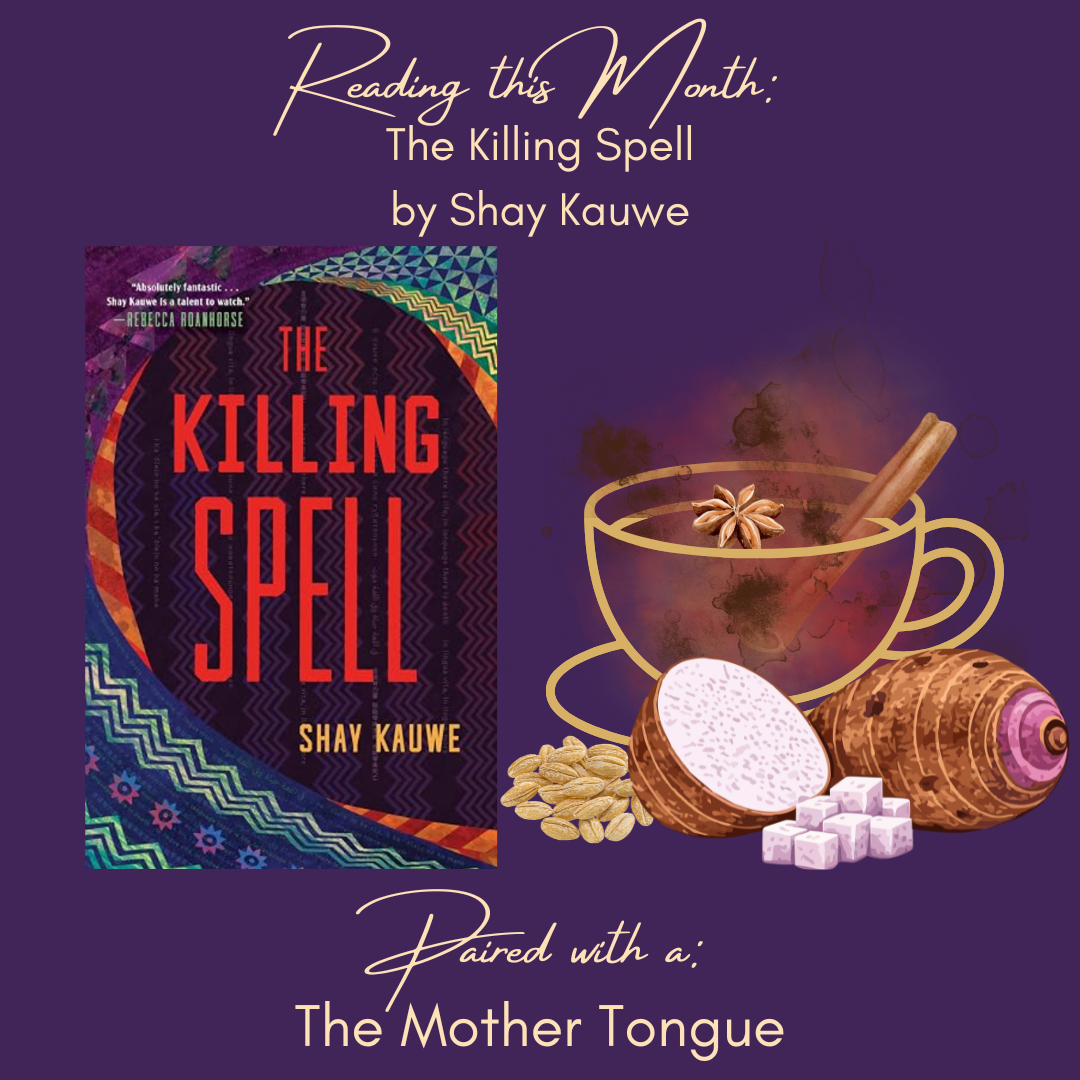
The Mother Tongue
Glassware:A small heatproof mug or glass (warm it first with hot water, then discard)
Ingredients
- 2 oz New Dawn 6-Year Cask Strength Bourbon
- 3 oz hot, strongly brewed roasted tea (hōjicha or roasted-barley tea)
- ½ oz taro syrup *(see note)
Warm the mug with hot water and discard it. Add the bourbon and taro syrup, top with the hot tea, and stir once. Garnish: A cinnamon stick and a whole star anise, floated. Serve steaming.
Taro syrup: Whisk 2 Tbsp taro powder into 1 cup hot water until smooth; stir in 1 cup sugar until dissolved; cool. Keeps refrigerated ~1 week. *No taro? A spiced demerara — demerara sugar simmered with a cinnamon stick and a star anise — works beautifully.
The cocktail: The Mother Tongue
The magic in this book is language as a legacy — spells are words, and Kea's power lives in a language the world keeps telling her doesn't count. It seemed like a moment for reflection so I didn't want a drink you tossed back. I wanted something warm that you’d hold in two hands the way legacies are supposed to be carried forward. Presenting “The Mother Tongue” a riff on a hot toddy that lengthens our 6-Year Bourbon with roasted tea for an earthy, toasted depth that tastes like the land itself, sweetens it with taro — the plant Hawaiian tradition honors as the elder sibling, the ancestor a people descend from — and finishes it with orange, cinnamon, and star anise so the whole cup smells like memory. A warm pour built to be sipped while reading and contemplate the legacy that has brought you to this moment.
The whiskey spotlight
Our 6-Year Cask Strength Bourbon is 70% corn, 15% rye, 15% barley, from organic New York grain aged at the Alton Distillery in the Catskills. It opens with cherry, apricot, almonds, and croissants — bold and fruit-forward, yet approachable enough to sip neat if that’s your preference. Additive-free and bottled at full strength, it doesn't thin out when it's warmed and lengthened with tea; it deepens, holding roasted, spiced notes without losing its own voice — exactly what you want from a whiskey meant to carry a legacy.
This is a month for remembering those who came before and the legacies they have entrusted us with. Shop the 6-Year Bourbon and the Mixologist's Tarot Deck, warm a cup of The Mother Tongue and toast the ones you love.
Please sip with purpose. 21+. Drink responsibly.