Revisiting Bee Balm in the Cocktail Garden: When history and whiskey collide
There is a moment in an August garden, just after the heat breaks in the evening, when the bee balm is loudest — not to the ear, but to everything with wings. The blooms are ragged and bright, and the bees haven't quit for the day. Stand near a healthy stand of it and the whole patch hums. That sound is the beginning of the best story you'll tell at your next cookout — and, if you play it right, the best drink on the table.
Meet the plant
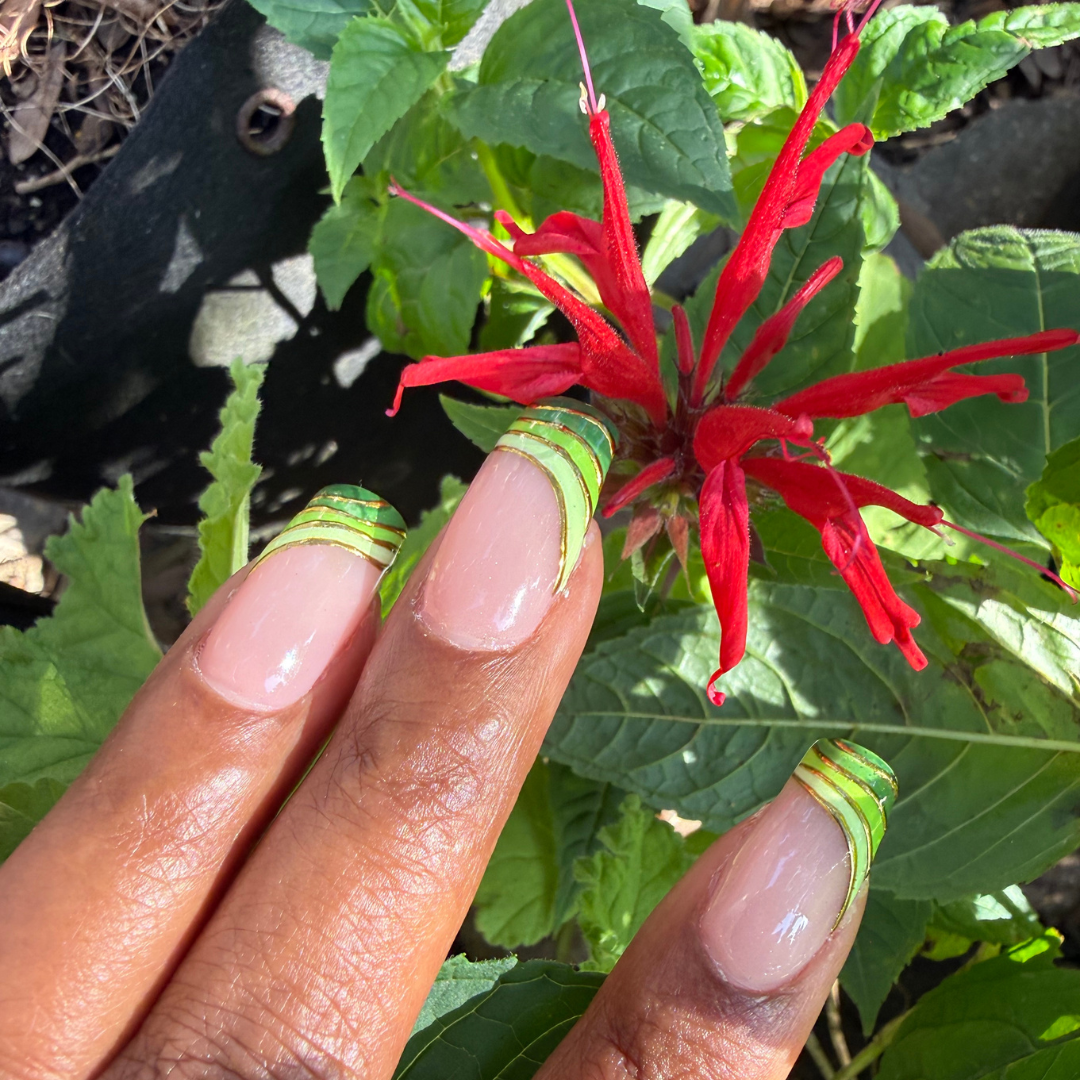
Bee balm, Monarda didyma, is a native North American perennial in the mint family, and it wears a lot of names: wild bergamot, bergamot, Oswego tea. As an ecologist, I love it for the company it keeps — its scarlet and lavender blooms are a magnet for bees, butterflies, and hummingbirds, which is why a single stand does so much quiet work for a garden. But bee balm carries something else, too: history. Long brewed as a fragrant tea by Indigenous peoples of the Northeast, it became "Oswego tea" to colonists who reached for it after the Boston Tea Party, when imported tea was cast aside. This is a plant that has always been part of the American table — and part of who got to sit at it.
Grow it yourself. Bee balm asks for full sun and soil that stays evenly moist; let it dry out and it sulks. Give the stems room to breathe — thin them for airflow, because bee balm is prone to powdery mildew and good air movement is your best defense. It's a hardy perennial across most of the country, spreading by underground rhizome, so divide the clumps every couple of years to keep them strong and neighborly. Harvest the leaves just before the plant flowers, when their oils run highest, and take the blooms at their peak. One rule holds above all: always leave plenty for the pollinators. The garden is a shared table, too.
The terroir bridge
Here is what the garden keeps teaching me: climate and geography leave their signature on everything they touch. Bee balm grown in cool, rich Northern soil tastes brighter and more complex than the same plant baked in poor ground, which is probably why my potted Bee balm in this southern heat is struggling right now and I need more flowers to get the same punch in my tea. It's the same truth in the bottle. Our 10-Year Wheated Whiskey flirts with Caribbean climate its first two years resulting in a bold, rich, spicy flavor and then is patient in the barrel through a decade of Catskill winters and summers. That long, slow swing of cold and warmth is what gives it a sophisticated, layered complexity — soft and rounded where a young whiskey is sharp. Wheat in the mash bill makes it gentler still, a smoothness that lets other flavors sit beside it rather than fight. Terroir isn't a slogan here. It's why your bee balm and our whiskey both taste like somewhere — and like someone who paid attention.
The cocktail
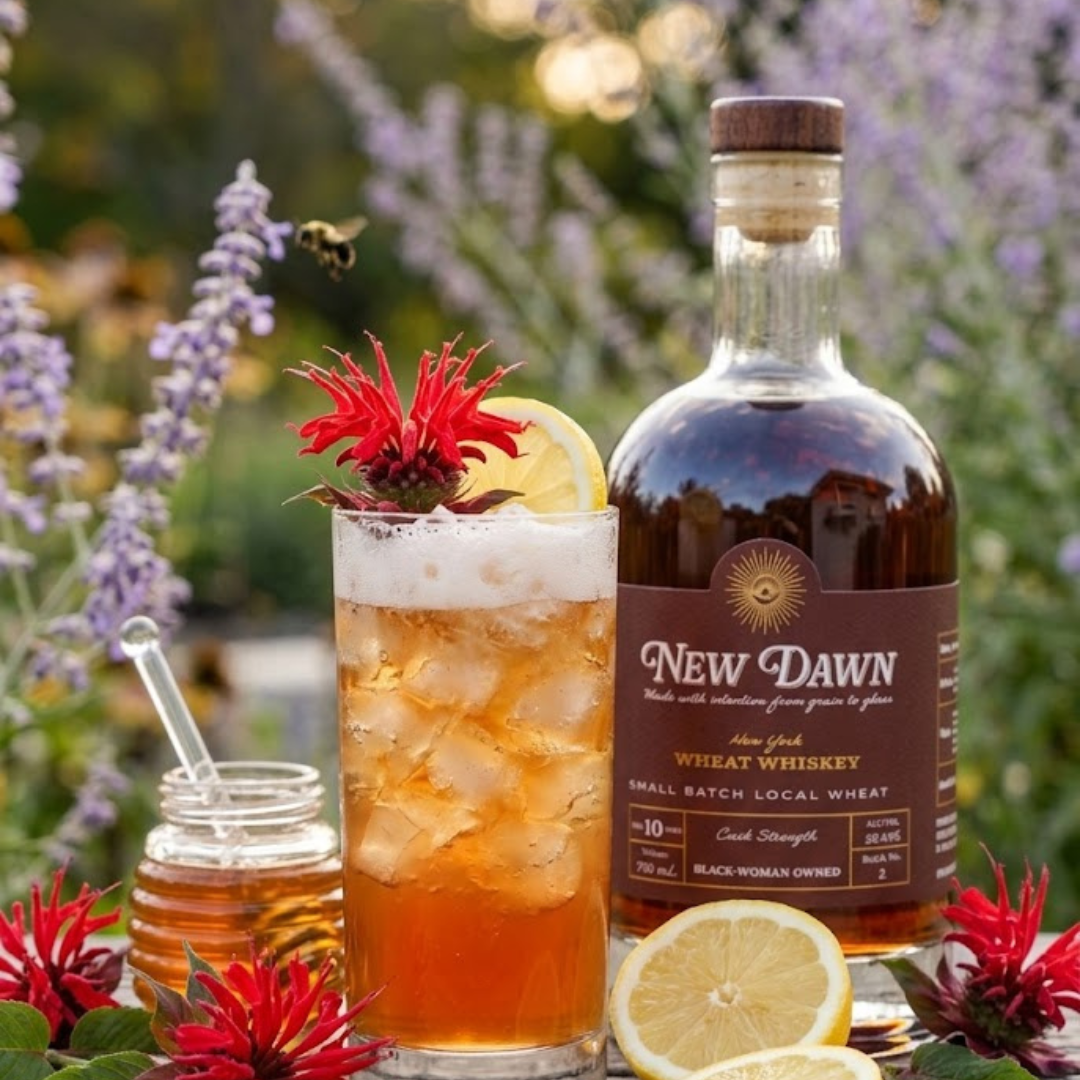
Which brings us to the glass, and to a drink built for a crowd. The Oswego Tea Sipper takes its name from bee balm's oldest identity — a nod to the tea that fed a table long before this land was plundered and pillaged. It's a proper summer sipper: bee balm steeped into a tea with a hint of lemon, a honey syrup made from the plant's own leaves, and two ounces of the 10-Year Wheated Whiskey, long over ice with a splash of soda for a bit of fizz. The wheated whiskey's soft, honeyed depth wraps around the bee balm's minty-citrus lift, and the honey ties the whole thing back to the bees that made the garden hum in the first place. This is the drink someone at the cookout tastes, raises an eyebrow, and says: “tell me more.”
The Oswego Tea Sipper
- tablespoon of bee balm flowers
- ¼ oz lemon juice (about half a lemon)
- ¾ oz bee balm–honey syrup (see note)
- 2 oz New Dawn 10-Year Wheated Whiskey
- Soda water to top
- Ice; a bee balm flower and a lemon wheel to garnish
Steep the bee balm flowers in 3 oz hot water for 5-10 minutes, strain and allow to cool. In a shaker combine Oswego tea, ¼ oz lemon juice, and honey syrup. Add the whiskey and ice, shake, and strain over fresh ice in a rocks or highball glass. Top with a splash of soda. Garnish with a bee balm flower and a lemon wheel. Bee balm–honey syrup: warm ½ cup honey with ½ cup water and a small handful of bee balm leaves until dissolved; steep 15 minutes, strain, and cool. Serves one. Please enjoy responsibly. 21+.
Sip with purpose. Grow bee balm and you feed the pollinators, honor a plant that has always belonged to this land's table, and pour something no one at the cookout has tasted before. That's grain to glass, bold by nature and built with care — and it's a story worth passing down. Pick up a bottle of New Dawn today to share with loved ones as you take a walk down memory lane.